

AI prehistory
In the beginning, I started out quite primitively – with ordinary questions, describing problems in regular chat windows in ChatGPT. Back then, it was something amazing, progressive, and I was happy about how it was "saving me time". I had heard about agentic development from various sources, but at first the problem was in my head (accepting that you have to pay for it), and there was also a compatibility problem – ah, those Linuxes. The models from the big players weren't excelling yet anyway, so it was more like consulting an "expert" than any continuous development with AI. Even so, it was often a great help and an experienced colleague on hand 24/7.
A renaissance with "OpenCode"
In January 2026, a colleague showed me that there is an application called OpenCode and that, after some controversies and conflicts with Anthropic (which banned connecting via "subscriptions" from third-party applications), it is possible to use OpenAI models in it. So I tried it and... it was great. First on one less important feature, then another, and gradually I completely dropped the "via chat" style of working. I was learning how to write complex assignments for the AI model as precisely as possible, and how to work iteratively so that it brought real benefit – saving time and producing the highest-quality output possible. Very quickly at this stage, I understood that without paying I wouldn't get far. So I tried the Plus subscription for about $23 for a month.
Gradually, however, I started running into limits and outages. The outages were partly caused by poor compatibility of OpenCode with my Ubuntu + older hardware, and by driver problems with the Nvidia GPU I have in my work laptop. After some time, I tried the Pro subscription for $100, partly because I expected fewer outages and better performance from the LL models themselves. Disappointment came very quickly – even on the Pro subscription, communication with their servers kept dropping, and there were long response times and errors. So it wasn't just my hardware after all.
Claude as salvation
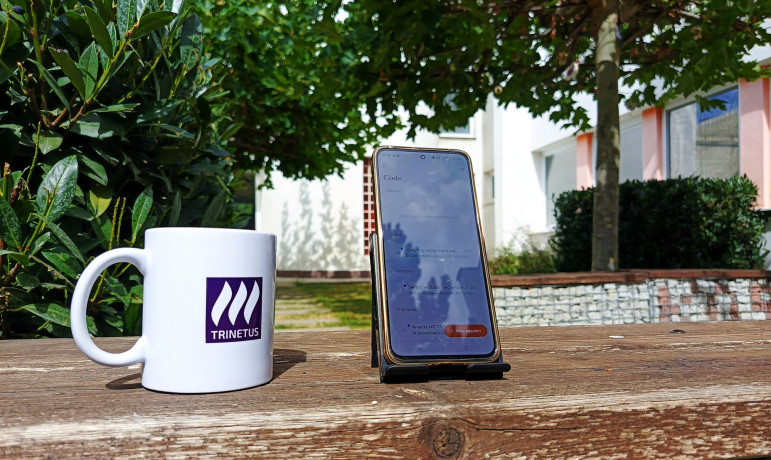
One day I decided – rashly, as is my habit, and with great pomp – to cancel (both) subscriptions with OpenAI (yes, I had already 2 ‒ personal + work), write them feedback about what a misery it was (because it "will" help), and delete the entire accounts once the subscriptions ended. I told myself I had nothing to lose, and for the same $100 I tried paying for Anthropic's MAX 5x subscription. At the same time, I installed Claude Desktop, which worked beyond my expectations from the very first minutes. Snappy, with a UI far more stable and clearer than OpenCode, and much lower RAM and CPU requirements. Plus, I can check the work in progress on my mobile phone, sitting in our beautiful atrium and enjoying the sunshine... and coffee. And so I found myself a new addiction.
A change in thinking and planning
For me, as a developer with more than 20 years of experience, it was a problem for a long time to let something artifical to "meddle" in my code directly and not have every single changed line under control. With the chat style of work, it was simple – whatever I didn't like, I simply rewrote my own way after copying it over.
Only with hindsight did I understand what a waste of my time that was, because it was still just a slightly better StackOverflow, and it didn't really increase productivity.
In the past, I was more conservative and very stubborn, and people who have known me for 10 or more years could tell you stories about it. But times are changing, accelerating, and there is no time for stubbornness if I want to stay relevant – not only as an individual, but also as an entrepreneur in our company.
Security and privacy
Another thing that may also come as a big surprise to people around me is the change in my approach to security and to the ability to have everything "under control" (ideally self-hosted). No, I am still an advocate of self-hosted over paid cloud services. Nevertheless, there are things where it simply no longer makes sense these days to burn hours of time and nerves on installing – and, above all, later maintaining – such solutions. Time is the commodity that decides today. Of course, I still approach security in a way that is, from my point of view, above average compared to what I commonly see in other (even much bigger) companies. Passwords, updates, security policy – all of that has to be in order!
Where I have completely changed is my approach to "security" concerning source code and its manipulation by cloud-based language models. You have to realise that what gets developed through these models in (at least) 95% of cases are applications, UIs, websites or scripts that are nothing exceptional from a source code point of view. They contain nothing revolutionary that someone else hasn't already built. And above all, the vast majority of that uniqueness is not in the source code itself, but rather in the business logic of the given product/service – which can be comfortably "stolen" even without access to the source code. That's why I push the theory that source code doesn't matter. Data matters. And that's why I have no problem giving my Claude agent full access and auto mode over project directories, as well as over a mock/anonymised DB on localhost. If something breaks, there is GIT, which sees every change, and everything can be rolled back in a few seconds without any losses.
Data security
What I am sensitive about, and where I will not let my guard down, is the handling of data. Especially personal data (GDPR and our related laws are uncompromising on this). A few days ago, an incident nevertheless happened to me: my Claude "colleague", in "MAX" mode, decided to pop over to the production server of one application and check – as part of solving a task – whether the web server was configured correctly, so that the completed task would actually work in production as well. It was caused by the fact that I access the server via an SSH key (not a password) on the same computer. Out of convenience, however, I hadn't given the SSH key a passphrase (why bother, when I have an encrypted disk, a firewall and other forms of protection). For this reason, it was able to connect via a bash command and find out what it needed. It was nothing harmful – the individual commands it used were very efficient and safe (read only) – but for me it was a red line: no AI agent may access any remote server without my knowledge! Simply no. So what followed was a reduction of my comfort: introducing a passphrase for the SSH key and preventing it from being cached at the system level, so that such an incident never happens again. The positive thing is that I dealt with it in such a banal situation, and not during a real security incident that would also involve a leak of personal data.
Testing and reviews
Since I work on various projects and with various collaborators/customers, testing and code reviews are, and always will be, a necessity. Many developers already use various agents for this phase of development as well. For me, it hasn't yet matured to the stage where I would release something into production that I hadn't even seen. By that I don't mean, of course, ordinary unit/feature testing to check whether the code does what it should. The same goes for code style/formatting – pipelines are enough for me there (phpstan, lint, security check, etc.). Likewise, a lot of rules stemming from business logic are covered directly by these tests.
Currently, I focus more on the visual side, on adherence to the business logic as a whole, and on UI/UX solutions (so that the user doesn't have to break keyboard everytime, when using my creation) – in short, whether it does what it should and whether it makes sense.
The last step before merging into the master/main branch is always a code review. Here I am old-fashioned, and I want to see everything that changed and how it changed. It's true that I no longer obsess over complete trifles, but there are things where I can really "pile on" the comments for rework. The code must be logically organised and consistent!
Does it all make sense?
Looking back at those 8 months, I can say that the benefit of agentic development has been truly enormous, and it helped me complete a great number of tasks in which I acted more in the role of a project/product manager/tester rather than an ordinary developer writing conditions and loops.
In upcoming posts, I want to share how we managed to refactor the 18-year-old mCMS content management system in less than a month, and I also want to write about how the development of our SaaS solution Ptrack.app is coming along – it will soon be open for use.